
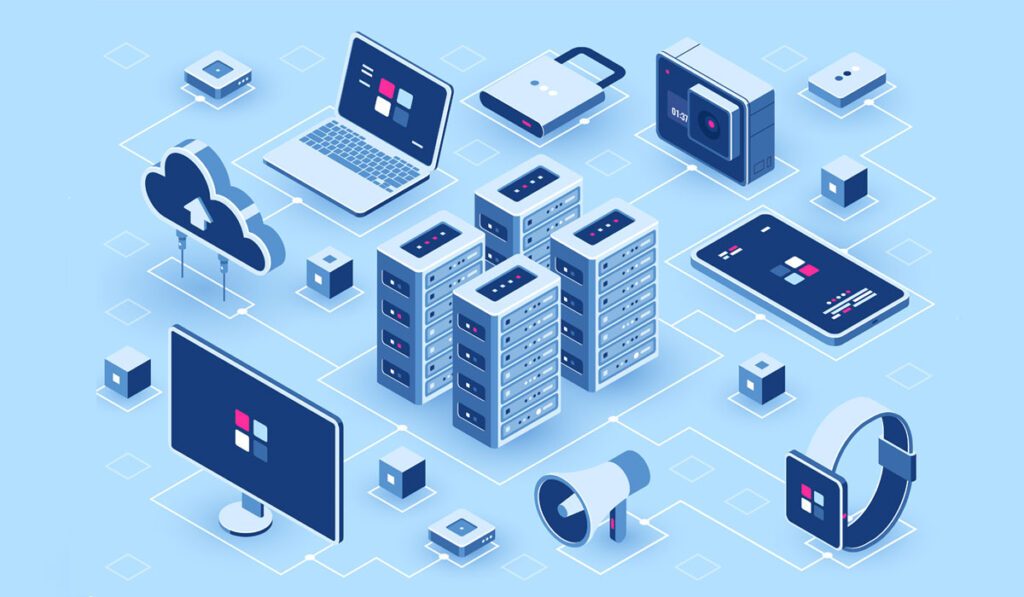
Already we talk here on the blog what it is, what it's for and what it's about, and how important cloud computing is to business. With the increasing advancement of technology and a global situation still pandemic, the sector innovates and offers increasingly solutions for users and companies.
The cloud is more than efficient storage solution – it is a unique platform for generating innovative data and solutions to leverage this data. This intense focus on adaptability facilitated a form of service-oriented thinking that was previously thought to be unattainable.
2020 was a crucial year for the sector, as it played an important role in facilitating remote work solutions. This allowed organizations to merge existing organizational processes with new cloud technologies to allow for greater flexibility during these uncertain times.
Look. Also:
- Growing up without losing financial control: Prosperittas reinforces its role as a strategic partner of companies
- WaveMaster AI closes 192 spots in Brazil by integrating 20 monitored beaches and over 800 beaches on 6 continents
- Shopping H de Blumenau wins new institutional website developed by NVX
- Spectrochem Opens New Institutional Site with Focus on Innovation and Digital Presence
- Gastronomy and Culture: A Meeting That Transcends Tastes
- How digital agencies can organize and protect customer accesses with a professional password manager
- Forget the “123456”: How a Password Manager Can Simplify Your Digital Life (and Avoid Head Pain)
- ACATS launches new site with modern design and intuitive navigation, developed by NVX – NationalVOX
- 8 Infallible Tips for Mastering Google Search in 2025
- Passwords Guard extends its mission to protect Brazilian companies with secure access and password management
The Covid-19 pandemic facilitated the focus on cloud resources as companies compete to thrive in this new remote or even hybrid work environment. The cloud has become an essential part of business continuity and is the key to unlocking organizational growth.
It is estimated that world spending on public cloud services is expected to grow 18.4% by 2021.
Follow the current trends for cloud computing and how they can fit into your business or business. An opportunity to contextualize your existing cloud resources and identify areas that can lead to future growth.
Hybrid Cloud
As the name itself already explains, it is the combination of a private cloud and a public cloud and allows data and applications to be shared between them. Hybrid clouds are part of environments with multiple clouds in which a company uses more than one public cloud along with local deployment.
This cloud model offers more flexibility and allows companies to move their key confidential data to private networks while providing less confidential data through public clouds.
According to studies, the hybrid cloud market was valued at 52.16 billion dollars in 2020 and is expected to reach 145 billion dollars in 2026 during a forecast period from 2021 to 2026. In addition, the hybrid cloud provides cost efficiency, security, agility and scalability.
One of the most significant benefits of hybrid cloud (among other things) is its support for a remote workforce. It provides companies with the flexibility to easily manage and accommodate their teams in home office with access to decentralised data.
Therefore, this affordable cloud environment is crucial to optimize efficiency and productivity across the company. Microsoft Azure, for example, offers various hybrid cloud products and services that companies can leverage to gain competitive advantages.
IT experts point out that hybrid cloud is the best option for companies seeking additional security and more control over their data, while maintaining cost-effective.
Serverless architecture
The serverless architecture is directly associated with cloud computing. It allows companies to develop and run applications without having to manage physical infrastructure, which means it removes architectural engineering from the process.
All your design, maintenance and upgrade are done by cloud service providers in exchange for payment for the service. As an example, I highlight Amazon’s web services, which offer serverless architecture. Your application is still running on servers, but AWS does all server management.
AWS is preferred by 77% of IT companies, compared to other serverless technologies. In addition, according to O'Reilly search, 40% of organizations adopted serverless architecture by 2020 due to reduced costs, scalability and productivity of the developer compared to traditional architecture.
Greater benefit: developers do not need to worry about infrastructure; instead, they can use their time to develop more important application resources. There is no doubt that its popularity will continue to grow in the coming years as well.
Artificial intelligence
Cloud computing and artificial intelligence (IA) have a symbiotic relationship. While AI enhances cloud computing – managing data, revealing ideas and optimizing workflows – cloud computing increases the impact and scope of AI.
For 2025, the overall market value of the AI is estimated at more than $89 billion annually, which means that organizations that do not adopt this trend will be behind their competitors.
Cloud services are democratizing artificial intelligence, making it accessible to organizations that fight the high entry barrier. Traditionally, investing in AI requires superior technical skill, computing power and a large amount of capital.
However, with the AI offered through cloud services, companies can implement and benefit from technology without making a major initial investment.
The combination of artificial intelligence and cloud services allows you to get the most out of both applications. The cloud provides an economical solution for hardware and software that has a high cost on site, while constant backup and recovery of data in a virtual environment makes it a reliable alternative to traditional settings.
At the same time, AI helps the cloud manage data as well as get insights into information that can be distributed as learning for the entire system.
Human cloud
The so-called “human cloud” consists of talent platforms that provide companies with on-demand access to a flexible workforce. In 2019, this sector generated $178,5 billion in revenue by connecting skilled and dispersed workers to various functions and organizations.
The human cloud endemicly develops networks based on multitudes of workers and recruiters, providing a diverse, low-cost indirect resource organization. With the support of personnel curators, these cloud-based platforms can offer greater compliance of work, quality and customer service than traditional personnel methods.
In the future, the online labor market will probably integrate deeper into the cloud, offering employees and organizations a clearer and more synthesized view of the available skills, opportunities and projects.
Cloud Gaming
This trend may have been unpopular in previous years, but cloud games should exceed $1 billion in revenue, according to some sources. It is expected that 2021 will be great for cloud games thanks to 5G technology that offers low latency and high-speed connectivity, as well as the ability to handle the huge data expected from streaming gaming services.
In cloud gaming, games run directly from the server. Players do not need consoles because they can access it on the Internet, just like Netflix already does. Speaking of this streaming service, There are rumors that the company even has plans to enter the game market soon.
In addition, the Amazon Luna (available only in the US) is in its early stages, and is responsive. Cloud games allow you to play on almost all devices, even those that are not able to perform the game due to their specifications.
Software as a Service (SaaS)
Software as a Service (SaaS) is one of the first and most successful existing cloud offerings. Includes all services and software offered by third parties on the Internet, negotiating subscriptions for licensing fees.
As one of the largest cloud application services, SaaS now contributes more than $20 billion to the quarterly revenues of software providers. The forecast is that this number will grow 32% each year.
The competition between SaaS companies has led to a wide range of low-cost solutions that ensure that public cloud services will dominate the market in the coming years.
The next generation of SaaS offers will also include machine learning (IA) as part of your services. Although some applications may be better than others, make sure that in the near future you will have difficulty finding a SaaS product that is not labeled “intelligent”.
Examples of SaaS: Hubspot, RD Station Marketing, Active Campaign (this is to stay only in the largest inbound marketing tools in the market)
Cloud security
Between January and April 2020, cyber crime increased sharply by 630% as new ways of working created new vulnerabilities to be exploited.
Distributing workloads among multiple cloud providers presents organizations with a considerable governance problem. It is no surprise that we have discovered that 65% of senior IT executives believe that security and compliance risks are the biggest barriers to obtaining the benefits of the cloud.
Generating and acting on the basis of insights between platforms requires a proactive approach equipped with potential blind spots sensitivity. This explains why 28% of companies consider security the most important criterion when choosing a cloud supplier.
Although cloud efficiency in terms of time and money is your most popular resource, many companies are realizing that cutting shortcuts in the cloud can make their organizational processes opaque; opening up a multitude of discrete entry points for cybercriminals.
Conclusion
With an increasing prevalence of cloud services in existing business operations, it is clearer than ever that the cloud is the future more than present. It is not just a storage solution, it is a source of innovation and growth.
The importance of the cloud cannot be exaggerated, and cloud computing technologies of all kinds and models will only become larger and more essential in the coming years.
How many cloud services and applications do you use? What's your opinion on cloud computing? Do you believe that rapid cloud adoption and cloud infrastructure expansion are good, or do you foresee problems with the cloud computing market in the near future?