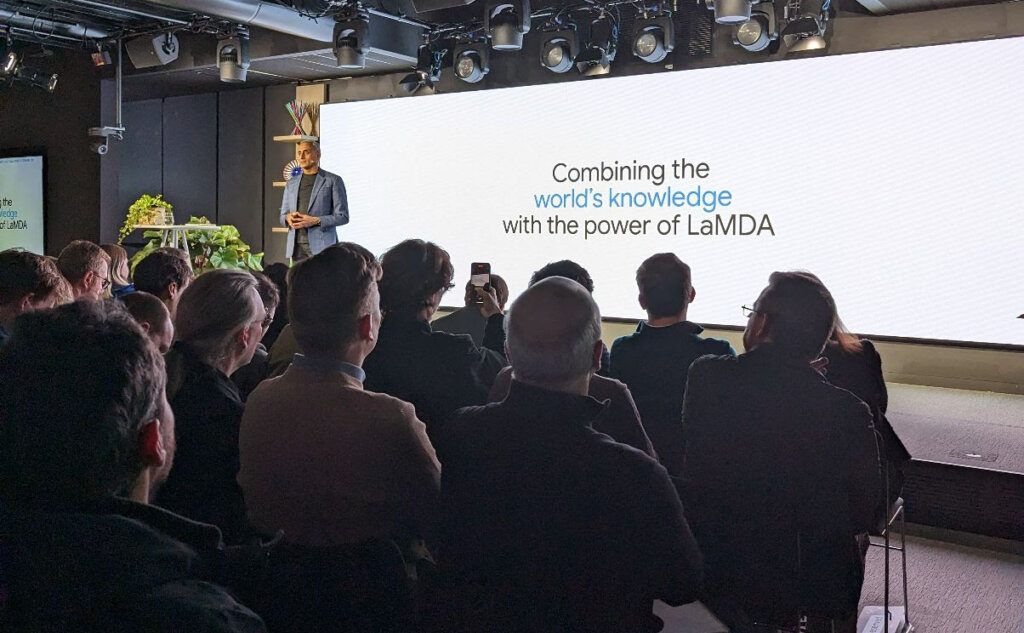
- In a global event held on Wednesday (8), in Paris, the company announced a series of new features, including the official launch of Multisearch for more languages and countries, including Brazil.
- Further details on Bard, Google's conversational AI experimental service, announced by the company on Monday, were presented.
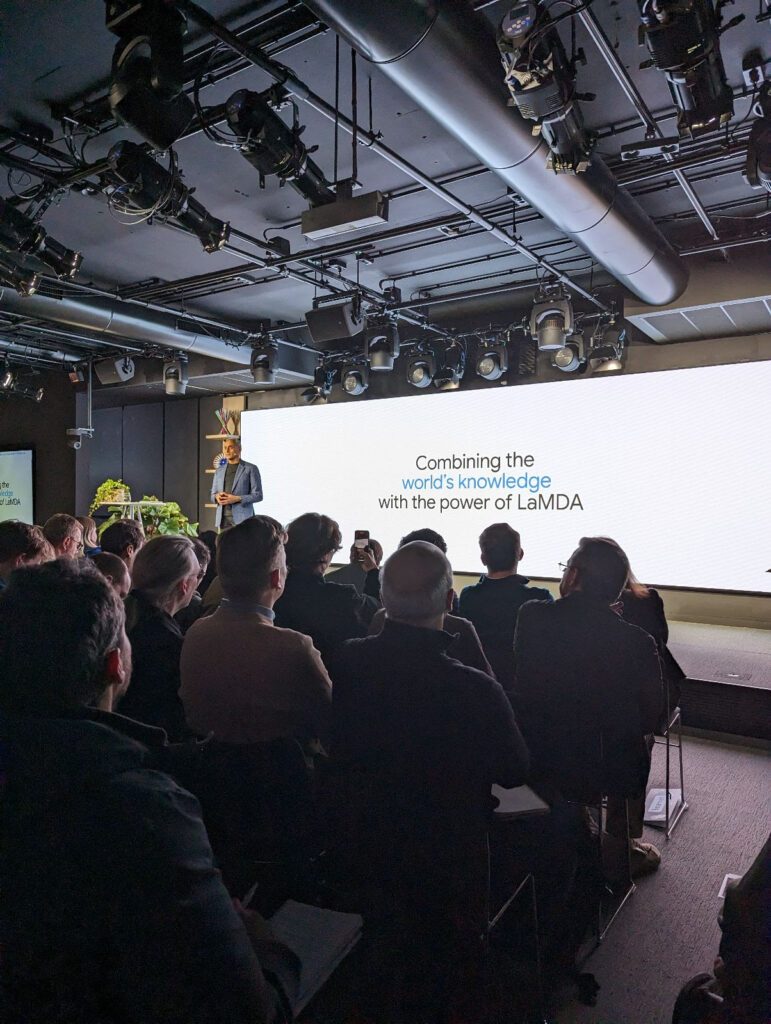
After announcing the arrival of Bard, its experimental conversational AI service, Google held on Wednesday (08), in Paris, a global event where presented the latest innovations in AI for Search, Google Maps and Google Translator. Among the main news announced by the company's spokespersons is the expansion to more Multisearch countries, search experience that combines image and text in the Search application. The experience is already available from today in Brazil.
In Maps, Google has shown advances in AI and Augmented Reality, including the expansion of functionality Live Indoor View, which includes 1,000 new airports, train stations and shopping malls in cities around the world, cities around the world, including London, Paris, Berlin and São Paulo in the coming months.
On that occasion, Google's Vice President Prabhakar Raghavan shared more details about Bard, a new experimental conversational AI service powered by LaMDA, and its applications. He also reinforced the importance of developing technology boldly and responsibly, with current and quality information. Bard is in a trial period for external groups and, after a feedback period, it should reach the public in the coming weeks.
Learn about the following main ads:
Multisearch coming to Brazil: new ways to “give Google”
Mobile camera has become a powerful way to explore and understand the world around us. To get an idea, the Lens app is used more than 10 billion times a month, since people research what they see through the images of their cameras.
Last year, we reached an important milestone with the launch in the United States of America of the Multisearch, a new way to search using text and images at the same time. In Google's app, you can use Lens to take a photo or use a screenshot and add text to it, just as you can naturally point to something and ask a question about it. The idea is to be able to point your camera naturally at something and ask a question about it. From today, the experience starts to air on mobile devices in all languages and countries where Lens is available, including Brazil. Read more in our blog post.

Recently, Google has also added to the Multisearch feature the possibility of searching locally. You can take a photo with Lens and add the “near me” in the search to find what you need or take a screenshot of a dish or object and see which restaurant or store the items are closest to. In the coming months, we will offer the resource to all languages and countries where Lens is available, including Brazil.
With Lens, Google's goal is to connect people to the world's information. It is already possible to use Lens to search using camera or photos, directly in the Search bar. Now, you can search for what is on your phone screen.
In the coming months, you can use Lens to “search screen” directly on Android. With this technology, you can search what you see in photos or videos on websites and utilities you know, such as messaging and video apps, without having to leave them or miss the moment.
Maps: Immersive View and Live Indoor View in more countries
Last year, Google shared its vision for the future of Google Maps: an interactive and intuitive map that reinvents how you search and browse, helping people make more useful and sustainable choices. At today's event, the company showed how AI is bringing this mission to life, with updates for immersive viewing and Live View, as well as new features for electric vehicle drivers and people who move by bicycle or public transportation.
One of the most expected features, Immersive View is now available in five more cities, including London, Los Angeles, New York, San Francisco and Tokyo, and in the coming months in Florence, Venice, Amsterdam and Dublin, and brings advances in AI and computer vision, with an immersion that merges billions of Street View images and aerial panoramas to create a digital model.
Let's say you're planning a visit to the Rijksmuseum in Amsterdam. You can virtually fly over the building and see where and how the entrance is. With a time slider, you can still see the appearance of the area at different times of the day and how the weather will be. It is also possible to identify where it tends to be more crowded to have all the information needed to decide when to go. If you are hungry, you can go down to the street level to explore nearby restaurants and take a look inside to quickly understand the animation of a place before making your reservation.
Google has also announced today that it will expand the functionality of Live Indoor View to over 1,000 new airports, train stations and shopping malls in cities around the world, including São Paulo, London, Paris, Berlin, Madrid, Barcelona, Prague, Frankfurt, Tokyo, Sydney, Melbourne, Singapore and Taipei. With Live View, you can point the camera at the mobile inside the venues to find stores, ATMs and restaurants.

From now on, in Maps, you can also follow the journey with the short view of the route or direct from the lock screen. For electric cars, the platform announces that in the coming months it will be possible to view the charging stations directly in Search and Maps. Drivers can add mandatory loading stops for shorter trips and the app will suggest the best destination based on factors such as current traffic, car load level and expected power consumption.


New releases make the Translator more accessible to its 1 billion users
For the Translator, Google announced changes in design, which has been completely redesigned for Android users and will gain a new interface for iOS users. The platform will also offer, in the coming months, more comprehensive and contextual translations for single words, short phrases and expressions with various meanings, helping you to understand better and find the best context-based translation. This will be available in English, French, German, Japanese and Spanish in the coming weeks and will be expanded to more languages in the coming months. Read more on blog post.
In Brazil and the world, the functions of augmented reality translation in Lens also begin to function, which blend perfectly the text translated into images, making them much more natural.
See details of each release in blog Google. To download the visual files, go to this link.