In an era when technology continually reshapes the way we interact with the world, it is no surprise that the real estate market has witnessed a transformational change. And it's not just amazing websites or apps with filters, I'm talking about augmented reality and virtual tours, two innovations that are not only playing cards in the game, but also winning hearts and pockets from customers.
If you haven't connected to these trends yet, it's time to update. After all, instead of letting the possible interested in buying your property waste hours and hours on face-to-face visits, you can make it explore every detail of the property without leaving home or from anywhere. It sounds like science fiction, but it's reality (increased!).
In this article I will explain what virtual tour and its variants are, as well as the RA Augmented Reality, as well as the best tips to transform your sales strategies using these technologies that are available to everyone.
Contents
Toggle- What virtual tours are and how they work
- Growing popularity of virtual tours
- Knowing the types of virtual tours in real estate
- Transformation of the customer experience
What virtual tours are and how they work
Basically, they are digital simulations that allow buyers and potential sellers to explore properties at a distance. Using a virtual reality computer, smartphone or headset (VR), interested people can “enter” into a home, examine all corners and imagine themselves living on site. Here what is worth is interactivity with the consumer. That's why it's so fascinating.
Virtual tours provide a dynamic and engaging experience, overcoming the limitation of static images or descriptions. They enable users to navigate the environments, observe architectural details and evaluate the layout of spaces, and all this without leaving where they are.
This tool is redefining the way real estate is marketed and visualized, overcoming geographical barriers and allowing real estate negotiations to take place with an unprecedented convenience.
Growing popularity of virtual tours
The popularity of virtual real estate tours has grown significantly in recent years, driven by several factors. First, the convenience and practicality they offer is incomparable. In an accelerated world, potential buyers can explore various properties without the need for face-to-face visits, saving time and effort.
In addition, the COVID-19 pandemic accelerated the adoption of virtual tours, as health and safety concerns restricted physical visits. And that ended up incorporating into the marketing strategies of real estate and construction companies.
Additionally, the real estate sector has realized the potential of virtual tours to attract a wider audience. Salesmen can display their properties to people moving from another city or even from another country, significantly expanding the reach of their possible buyers.
Knowing the types of virtual tours in real estate
The universe of virtual real estate tours is diverse and constantly evolving, offering multiple formats to suit different preferences and needs. Let's explore some of the main types of virtual tours available. Check it out:
360 degree virtual tours
These tours provide an engaging experience, allowing users to navigate through a property with 360-degree complete view. The viewers can control the direction of the look, providing a feeling of physical presence in space. 360-degree tours are highly interactive and often used to highlight all the details of a property.
Benefits for the real estate market
- Global accessibility:
360-degree virtual tours allow buyers anywhere in the world to explore properties without the need for physical travel. This is particularly advantageous for international customers or other regions, significantly expanding the potential market of a property.
- Efficiency in the purchase process:
For buyers, these tours save time and effort, eliminating the need to physically visit various properties. They can do an online pre-selection, personally visiting only the properties that really interest them.
- Greater transparency:
These tours provide a more faithful and complete view of the property, helping build trust between buyers and sellers. With a detailed view, buyers can make more informed and secure decisions.
- Market differentiation:
For sellers, offering a 360-degree tour can differentiate a property in the competitive real estate market. Properties that present this feature tend to attract more attention and engagement from potential buyers.
Guided virtual tours
Similar to having a personal digital tour guide, these tours are conducted by a real estate agent or narrator who guides viewers through the property, highlighting important features and providing detailed explanations. This format is ideal for buyers who prefer a guided approach.
Benefits for the real estate market
- Personalization and attention to details:
Guided tours offer a personal touch that can be very attractive to buyers. The presence of a specialized guide that can answer questions and provide detailed information makes the experience richer and more informative. - Facilitation of decision-making:
By providing detailed explanations and highlighting the unique features of the property, guided tours help buyers better understand the value and potential of the property, facilitating informed decision-making.
- Accessibility and convenience:
As tours can be accessed from anywhere, buyers have the convenience to explore the property at their own pace and time, without the need to schedule face-to-face visits.
- Enhanced engagement:
The guided approach keeps viewers engaged and interested, as narration helps to keep focus and attention on the most important aspects of the property.
- Effective marketing tool:
For sellers, guided tours are an effective way to present the property in a professional and attractive way. They can highlight the unique features of the property so that the photos or unguided tours could not achieve, increasing the chances of attracting interested buyers.
Interactive plants
Interactive plants allow users to explore a property by clicking on specific rooms or areas in the layout. They can easily jump from one room to another, facilitating focus on areas of interest. This format is especially useful for buyers who wish to better understand the layout of spaces.
Virtual Reality Tours (VR)
VR tours raise immersion to another level, using specialized headsets. Viewers can virtually “walk” through the property and even interact with objects in the environment. This format is advanced and offers an extremely realistic experience, ideal for buyers familiar with technology who want more detailed exploration.
Main features
VR tours offer a complete immersion experience, allowing users to feel like they are physically present on the property. With the ability to explore each corner and angle, buyers can get a deep view of the property.
In addition to simply visualizing the space, VR tours allow users to interact with the environment. They can open doors, light lights and even move objects, providing a more engaging and realistic experience.
With high quality graphics and detailed rendering, VR tours capture the essence of the property, including textures, finishes and architectural details. This allows buyers to view the property with impressive clarity.
VR tours can include simulation of different scenarios, such as changes in lighting throughout the day or provision of furniture in different layouts. This helps buyers to view how the property can be adapted to their needs and preferences.
Augmented Reality Tours (RA)
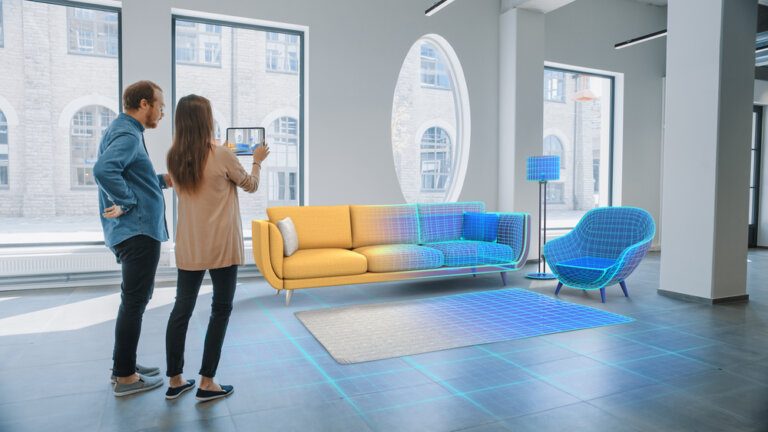
RA tours combine digital and physical worlds by overriding virtual information about a live view of the property via a smartphone or tablet. Buyers can use RA to visualize how their furniture fits into space, becoming a valuable tool for customization.
Imagine you're interested in buying an apartment and you're doing an RA tour. You point your phone to the empty space of the room and, on the screen, you see a virtual view of your sofa, center table and shelf. You can move the furniture virtually, test different layouts and even change the color of the walls to see how the environment would look with a new painting.
While walking around the apartment, information about finishing materials, history of renovations and decoration suggestions appear on the screen, helping you make a more informed and personalized decision about the purchase. The RA helps reduce uncertainties by providing a more concrete view of how property can be adapted. This is especially useful for buyers who have difficulty viewing changes only from plants or descriptions.
Transformation of the customer experience
These technologies are not just a marketing trick; they are redefining the real estate experience. Customers can now make more informed and quick decisions, and construction companies and real estate companies that are at the forefront of these innovations are already reaping the fruits.
AI algorithms (Artificial Intelligence) will become more sophisticated in understanding individual preferences. Virtual tours will be customized for each viewer, showing them properties that align with their specific needs and desires. AI-oriented Chatbots will also offer real-time assistance during virtual tours, answering questions and providing information.
Want to know more about how augmented reality and virtual tours can transform your real estate sales? Meet Leadsquad: Sales Accelerator Platform for Enterprises Real Estate and take your business to the next level!