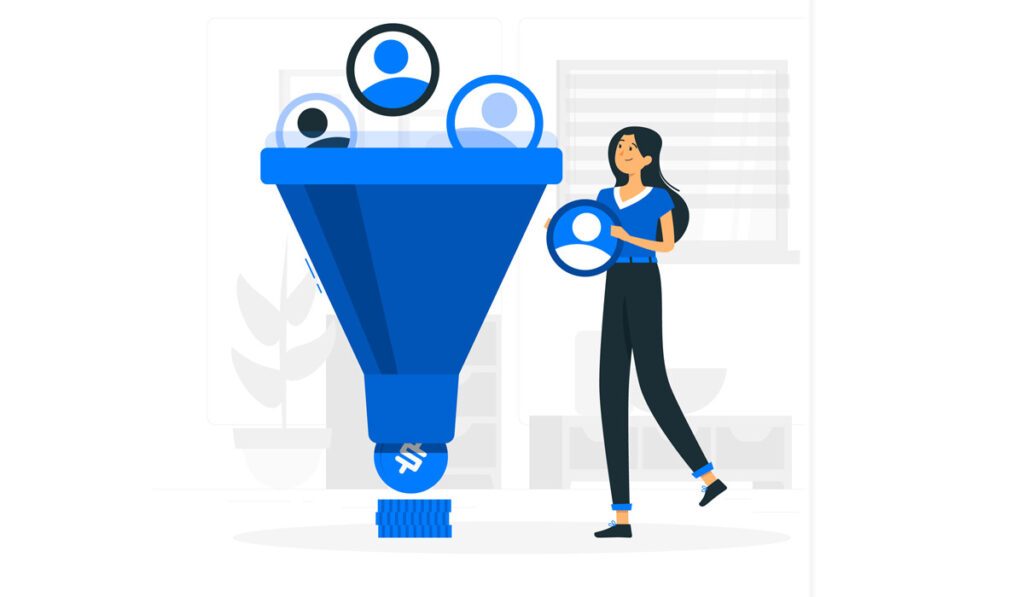
The term is not new, but is one of the pillars to achieve results with digital marketing. The sales funnel should be considered a priority in any project where the internet is intended to be used to sell.
It can also be summarized as a step-by-step process that allows you to bring your potential customer closer to your offer and a purchase decision through marketing actions, such as automated emails, videos, blog articles and target pages, among numerous materials that will sell to you.
See also:
- Growing up without losing financial control: Prosperittas reinforces its role as a strategic partner of companies
- WaveMaster AI closes 192 spots in Brazil by integrating 20 monitored beaches and over 800 beaches on 6 continents
- Shopping H de Blumenau wins new institutional website developed by NVX
- Spectrochem Opens New Institutional Site with Focus on Innovation and Digital Presence
- Gastronomy and Culture: A Meeting That Transcends Tastes
- How digital agencies can organize and protect customer accesses with a professional password manager
- Forget the “123456”: How a Password Manager Can Simplify Your Digital Life (and Avoid Head Pain)
- ACATS launches new site with modern design and intuitive navigation, developed by NVX – NationalVOX
Think of the sales funnel as a virtual seller who works 24 hours a day, 7 days a week, 365 days a year, without complaining or asking for more money. And they're everywhere, even if you don't realize.
Understanding the phases of a sales funnel
To create a successful sales funnel, we need to start by understanding the four phases that make up the method and which include the awareness stage, relationship stage, sales stage and upsell stage.
Awareness Stage
In the Awareness Stage, your goal is to let people know you exist. Ask yourself: “What can I do to make people aware of my company?”
There are many ways to reach your target customers and develop brand knowledge.
- Content marketing
Content marketing is a way to build an audience and create brand awareness. Writing articles can direct traffic to your site through SEO and social media, while allowing others to see you as an expert in your area.
- Video
Video is another tool that can help raise awareness. Videos can allow people to see who you are as a person and establish a deeper connection with you. Videos can also be used to demonstrate a product (or service) or share other ideas.
- Paid Ads
Advertising can be a great way to reach your target audience quickly. Payed ads usually allow you to segment people by preferences or demographic data.
- Mouth to mouth and references
Mouth-to-mouth and references will start to generate awareness for your business if your products or services and content are good.
While getting customers through references is good, don't just trust it. Instead, build a real marketing system that provides predictable revenue and results.
Relationship Stage
After people know your brand, you want to continue to build a relationship with them in the relationship phase. At this stage, ask yourself how you can build trust and authority so that people feel comfortable buying from you.
Think of which channels of communication will allow you to communicate with your audience more effectively.
Email marketing is a popular choice for online marketing professionals because it is relatively cheap. After someone enters your email list, you can continue communicating with that person by sending emails.
You can even use the new segmentation to show ads to people who visited your site before, so you can continue to develop familiarity with the brand of these potential customers.
Some other channels may include Social media, webinars or even sponsored videos.
During the Relationship Stage, you also need to decide which purchasing beliefs you need to install before your customer buys. For example, a bodybuilder may need to believe that a protein powder for muscle mass gain comes from 100% reliable ingredients and is an effective source of protein before buying it.
A belief system consists of beliefs and prejudices that a person may have in relation to his product or service.
Decide which purchasing beliefs are needed. Then incorporate them into the sales funnel during the Relationship Stage. Educate your potential customers so they're ready to buy as soon as they reach the sales stage.
Sales Step
After your potential customers have passed the Relationship Stage, send them to the Sales Stage so you can close the sale. At this stage, ask yourself what is the best way to make people pay.
If your Relationship Stage is well planned, selling will be easy. Your client will already want to buy your products or services. However, you can still improve your results by having a strong sales stage.
One way to improve sales results is by use urgency or scarcity to make people buy. The shortage is optional if you have done a good job of building trust and authority in the Relationship Stage or use a Relationship Funnel instead of a sales funnel for your company.
Avoid using false scarcity to make people buy. Customers can feel it and keep them from trusting you.
Upsell Step
Finally Upsell, which is where companies can earn more money by selling additional related products or services to their customers. McDonalds became a multibillion dollar company simply asking its customers “Would you like fries as a side dish?” after they bought a hamburger. There were born the Mc Offers.
In addition to generating more revenue for your business, upsell can also improve customer experience. Some people who are buying a ticket to a specialized online event about a particular sector may be willing and even want to pay more to access other benefits.
When designing your upsells, think about what other products or services your customers may want. Can you sell a more expensive product or service that can help them even more? Or can you cross-sell a similar product or service in which they may be interested?
Important: Sales funnels deal with relationships!
Upper, intermediate and lower funnel
The traditional methodology of inbound marketing describes a sales funnel as having a top, bottom and middle. These categories are related to the four stages mentioned above.
Funnel top (TOFU)
The top of the funnel (TOFU) corresponds to the stage of recognition of a sales funnel. People at the top of the funnel are not ready to buy, but in search of information to help them solve their problems.
At this stage, we focus on talking about the problem and sharing information that can help our audience find a solution. We talk about the problem our product or service is solving to get the user's attention.
By marketing for potential customers at the top of the funnel, the long-term goal is to educate them with content and move them to the bottom of the funnel. These potential customers may not be ready to buy now, but with due care, they may become potential big customers later on.
After a potential customer adheres to his email list, he moves to the funnel.
Funnel medium (MOFU)
The medium of the funnel (MOFU) corresponds to the relationship stage of a sales funnel. At this stage, we feed our potential customers to be ready to buy when they reach the bottom of the funnel.
The funnel medium has two main objectives.
The first goal is to establish relationships by creating trust and positioning themselves as an authority. You can accomplish this task by sharing useful and relevant content with your followers.
The second goal is to install the necessary purchasing beliefs.
Talk about your solution and show your potential customers because it's the best way to solve their problem. Cover all the resources and explain why it works so well.
Use articles, videos, podcasts and other forms of content to educate your audience so that they see you as an expert on the subject. You may even present some case studies or testimonies as social proof to make your product offer or service even more attractive.
Funnel Background (BOFU)
The bottom of the funnel (BOFU) corresponds to the sales stages and upsell of the sales funnel. The aim of this step is to sell your product or customer service and maximize profits by selling more products or services.
Anticipate any common objections your client may have and treat them in your sales copy. Also consider providing answers to the most frequent questions to speed up the purchase process and reduce customer support time.
Add a few examples of results your other customers have achieved. Use detailed case studies, show statements, and conduct interviews with customers to build a social proof.
Conclusion
There are several possible ways to manage your business's sales funnel. In general, as we have seen so far, you need to control your consumer's journey to understand how customers find your company and how they convert.
In each of the funnel stages, it is important that they have specific activities. Thus, the client can be impacted precisely with the content he needs.
Understand that regular funnel evaluations are also required. Thus, if any change occurs in the behavior of the journey or possible repair points are perceived, the funnel should be improved to be always adjusted according to the customer's needs.
Because of that, CRM is the ideal tool for the management of the sales funnel because it allows to improve the effectiveness of funnel by controlling and recording all activities and contacts performed by prospects, leads and customers.