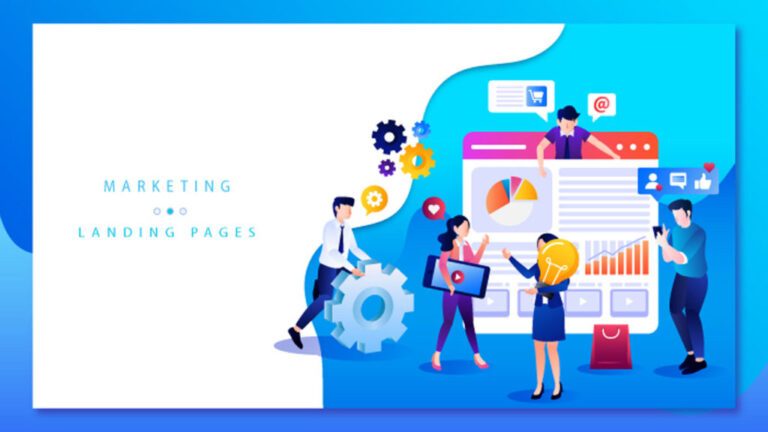
Landing Page, or destination page, or even the literal translation “landing page”, is a strategy used with great success in digital marketing to get conversions beyond your normal website or blog.
It can also be understood as a dedicated page that aims to generate conversions. Be it from a client, leadOr opportunity.
Although your site homepage has dozens of possible distractions, the destination page is super focused. Having fewer links increases conversions, as there are fewer tempting clicks that drive visitors away from the call to action.
Read also
- WaveMaster AI closes 192 spots in Brazil by integrating 20 monitored beaches and over 800 beaches on 6 continents
- Forget the “123456”: How a Password Manager Can Simplify Your Digital Life (and Avoid Head Pain)
- Password Manager: The Unnegotiable Pillar of Your Digital Security in the Connected Age
- The Power of Google Evaluations: How to Improve Your Business’s Reputation
- How to make a diagnosis of your website performance
- CRM for real estate and construction companies: boosting sales and loyalty to customers
- Best practices for digital security on websites
- Does organic reach still make sense in digital marketing?
- Optimizing AI Ads for Digital Performance
That's why marketers always use a landing page as a traffic destination.
Of course, your site homepage is attractive and sounds amazing. It shows the brand, allows people to explore a range of products and offers additional information about the company and its values.
From it, a visitor can go anywhere – if you apply for a job, read blog posts, check customer cases, review the terms of service, etc.
But they don't necessarily make a purchase. And that's the point!
Why are landing pages important?
Many companies send their paid media traffic, email or social media to their homepage. This is a big missed opportunity. When you know that a targeted traffic flow will reach your site, you can increase the likelihood of converting this traffic into leads using a targeted destination page.
Imagine you have an ad for Google Ads CPC (cost per click) on display for one of your best keywords. Even if you announce how differentiated and interesting your company is and someone still clicks on this ad, do you want to send it to the home of the site?
When visitors arrive at your site, what should they do and what do you want them to do?
After discovering what action you want a visitor to perform, make it easy for you to do just that. Send them to a landing page that requests the completion of this action. You will see the effectiveness of your digital marketing improve a lot!
Types of Landing Pages
You will see some variations of landing pages out there, depending on the strategies you have thought about, but there are actually two main types (defined by their objectives):
1. Lead generation: also called pages for capture of leads, they use a form as acall to action (CTA). This form almost always collects lead data, such as name, email and visitor phone numbers.
You can offer something for free, such as an ebook or webinar, in exchange for contact information. Those who sell over the internet can also use these pages to create lists or offer free shipping as well as special offers.
2. Clicks for sales: frequently used by ecommerce and SaaS professionals (software as a service), click pages go directly to the sale of some product, trial or subscription. They usually have a simple button like call to action that sends the visitor to a checkout stream (such as the app store) or concludes a transaction.
What are the elements of a Landing Page?
You need an offer!
Could be. an ebook, a spreadsheet, infographic or a video with bait content relevant to course sales, for example, that offer links and downloads.
But attention: the offer must be in the interest of the ideal customer (persona) and be related to the stage of the purchase cycle in which it is. Generally, when a potential client is in the early stages (still in discovery and learning), the offer will be more educational and related to the search for options available.
Later on in the purchase day (e.g. interest and decision), the offer will be focused on the purchase criteria and decision-making process.
Elements that should compose a landing page:
- A page that's completely focused on the offer. Even the navigation on the site is removed so as not to distract the offer.
- A compelling title and space to explain how the offer offers enough value for a visitor to agree to leave an email address and other information. Markers included to detail the benefits.
- An image showing the appearance of the offer.
- A form to capture at least one email address and, when necessary, more information (name, company name, persona qualification question, business questions, etc.)
- A means to deliver the offer – also known as the thank you page
Deliver the offer with a thank you page
A thank you page is essential to complete the experience on the landing page. Always try to raise her to make your delivery more assertive.
It is a separate page that appears after filling out the form and when the visitor clicks on the Download button. It can also offer the promising offer and direct navigation to the rest of the site.
Don't forget to include additional decoy phrases in your thank-you experience: an invitation to sign the blog or download another related offer.
Avoid putting thanks on the landing page. This is not ideal for some reasons:- It is hard to evaluate the success of your destination page, except to metamorphize visits, conversions and origin. The goal is to reach the thank you page, measurable in Google Analytics and other marketing software analytics.
- Your lead is lost because the landing page for strategic reasons does not include browsing the site. This can often be frustrating!
- You miss the opportunity to further develop your relationship with your brand by offering the next steps.
What can't stay off a landing page
Contents
ToggleTitle and subtitle
Studies indicate that, out of every 10 visitors to a page, 8 read their headline, but only 20% of them will check the rest of the page. It is called “selective attention”.
The visitor has no time to waste and you need to get to the point to get your attention. That's why the title and subtitle of a landing page are really its main elements.
The main page calls should convey the value proposition your business wants and attract the visitor to want to know more about it.
If the user arrives at the landing page to download an ebook or sign up for an online course, for example, he needs to have this solution immediately in view.
No more screwing around with scattered text.
The piece must also transmit the sense of urgency so that he is encouraged to act faster, without giving room for change of heart. A landing page title could include something like “down now, only 5 minutes left”, for example.
Image
Not only a good title and subtitle, which clearly convey their value proposition, are important. Choosing a quality image helps attract interested parties.
Remember the old phrase: “one image is worth more than a thousand words” and on the landing page it needs to be striking and definitive. Perhaps a generic photo taken from an image bank could distract the visitor from the focus of conversion.
To create a differentiated image, use image editing tools like the Canva, I'm sorry, but I'm sorry. It's simple and intuitive. With it, you have access to multiple templates ready, just customize to use.
Offer
Describe your offer clearly. This will help the company sell its idea and eliminate possible doubts from the visitor's mind.
Follow some tips to improve the reading experience and landing page content that converts to leads or sales:
- Highlight in bold or cheerful colors important terms such as CTA buttons, highlighting the content to be offered or reward
- It is important to focus on benefits and not just on numbers or features
- Try to use short and objective phrases
- Short and explanatory videos are also efficient
- Use bullet points to facilitate reading.
A social proof, also helps in convincing conversion. Include testimonials from people who bought, downloaded or found value in your offer can help visitors take action.
They work as recommendations.
Form
It is through it that happens the great magic of the landing page, the conversion, and needs to have a special dedication and attention in its construction.
Try to include only the information you really need to collect from leads. The most used fields are name, email, phone, city, state, office...
But remember, the more data you ask about his visitor or company, the more he will think about dropping out of the form without giving any satisfaction.
So, depending on your strategy, if you need to be quick, just email to target other marketing actions.
Conclusion
As we have seen so far, the landing page is an online tool that can be extremely beneficial to your business, increasing the amount of potential customers.
They focus on their target audience and provide visitors with easy and direct access to a product or service they are interested in. They can be customized to keep visitors involved with the offer, encouraging them to perform the desired action and increasing sales.
Also, there is no need to reinvent the wheel, because you can always use the best models that already exist in the market and in some paid toolsthat offer functionality.
If you are not using landing pages to promote your product or service, you may miss an excellent marketing opportunity!
Want to know how to start using landing pages for your company? Or do you need help with your offer strategy? Talk to me here.
Until the next post!