
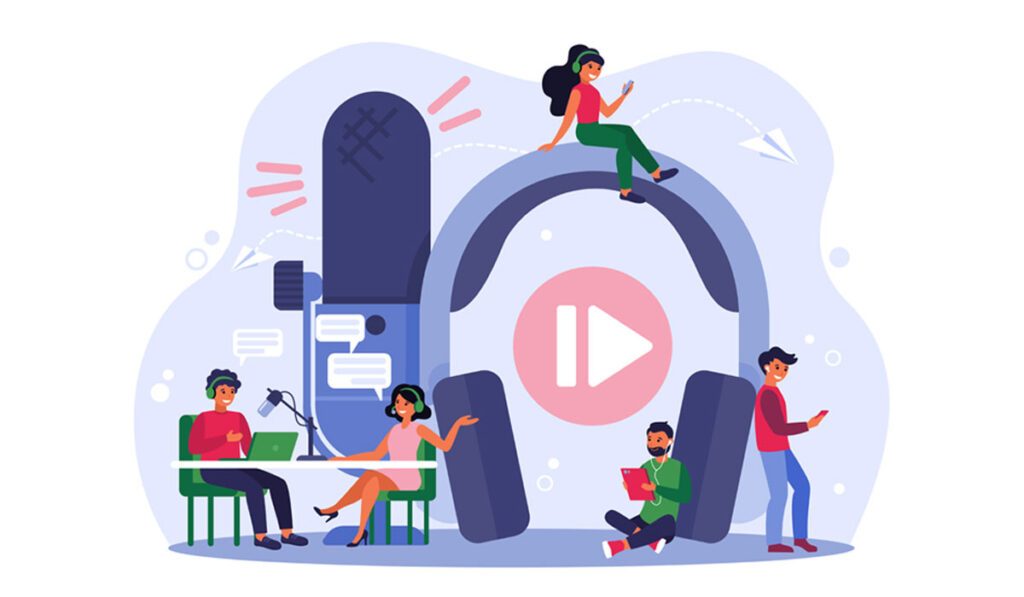
In the podcasts wave, social media discover that audio can be a great line to seek reach, audience and attract audiences who prefer to listen and be heard in conversations with friends and followers.
The idea is not exactly new, we've been doing this for a long time with the chats of WhatsApp, Telegram and others, but offering new possibilities, resources and voice interactions for engagement of communities connected in the networks is a trend without turning back.
Just see the success of the Cluhhouse app, subject we have already talked about here in the Blog, still limited to iPhone, but that soon (and so hopefully) should be available also for Android users.
See also:
- Gastronomy and Culture: A Meeting That Transcends Tastes
- Nationalvox is honored by ALESC for its 20 years of innovation in digital marketing
- NVX 20 years: A history of innovation, partnership and success in digital
- Digital Transformation in Cuiabá Companies: Benefits and Challenges
- Social media trends for 2024: platforms that are shaping digital marketing
- The Power of Google Evaluations: How to Improve Your Business’s Reputation
- 7 content to convert to funnel fund with real estate marketing
- Enhance your sales with the power of WhatsApp Marketing
According to MIT Technology Review:
“during the pandemic, audio features have become an easy way for people to stay in touch while avoiding Zoom fatigue and other video conferencing applications. But now a new wave of modern applications is incorporating the immediacy and rawness of audio into the central experience, making the voice the way people connect again. From phone calls to messages and back to audio – the way we use our phones may be closing a circle.”
Speak and you will be heard
First, social networks conquered the text. Then they took over the video. And now, the new frontier is being explored: audio.
It's no surprise that audio is popular. It is a deeply engaging and intimate medium, usually with a captive audience that explicitly chooses to listen.
It also fills a unique moment in the day: you can listen while preparing dinner or take the dog for a walk, unlike more visual activities such as watching TV or browsing the feed of a social network.
The incursion of social media in audio can reach this captive consumer audience by offering:
More features or features to keep users in social media applications for longer. Social media continued to see constant growth of users as consumers seek to connect virtually or have free time during the pandemic.
An alternative method of consumption for users who do not wish to read or view content. Social audio spaces have great potential, with consumers seeking more private or personal experiences than the nature of transmitting status updates or tweets. It is also a timely addition for users who may be reducing the time spent on visual feeds, as the pandemic has increased the screen time of most consumers.
Additional ad formats on social networks. As users spend more time in social media applications, advertisers can serve more ads for these users – an understandable desire for social networks that depend almost exclusively on ad revenue. Facebook, Twitter and Snapchat have notably prioritized new ad formats in recent years.
Twitter Spaces in Action
O Twitter Spaces, or Spaces, is how the network has named its new functionality. With a similar format to Clubhouse, it is the social network bet to compete with the app. The rooms, with unlimited audience, have a host profile and carry up to 11 people speaking simultaneously.
Listeners have different ways of interacting in the Spaces rooms. In addition to the feature of raising your hand to speak by turning speaker, you can add reaction emojis in real time and share the access link to other people.
In Brazil, the function is being gradually released to Twitter users and it is good to remember, it works only on the smartphone app. Everyone can access a room, but only a limited group can create it. Check out how to use Twitter Spaces:
To create a Space just go to the create button and click on the icon where diamonds symbolized.
Add a description
You will have the option to add a description (maximum 70 characters). I recommend adding a short but specific line to mention the topic you will talk about and any guest speaker you will be presenting.
Your Space title will be standardized as “Space of [Your name on Twitter]”, which cannot be changed today.
Enable subtitles
The first time you are the host or speak in a Space, Twitter will request your consent to have your speech subtitled. This will allow users to see live subtitles while listening to Space (they should choose “show subtitles” in Space settings).
Add Speakers
You can add up to 10 people (in addition to the host) as speakers in a Space.
Choose from three options of speakers:
- All
- People you follow
- Only people you invite
You can always change that later, while hosting a Space. If you select “Only the people you invite”, you can send invitations to speakers via DM.
As the host, you must activate subtitles for your Space. It is highly recommended to activate them to make your channel accessible and inclusive for all listeners.
While a Space is live, you can approve requests to speak of listeners. All speakers you approve will count to the limit of 10 in total.
If you have problems with speakers, you (like the host) can remove, report or block them. Note that if you block a user inside a Twitter Space, you will also be blocking it completely on Twitter.
There is no limit to how many listeners can enter a Space.
When you enter a Space, your microphone is silenced by default.
Once in Space, there are some actions you can perform:
- change your settings (such as enabling subtitles and sound effects),
- request to be a speaker,
- see the list of speakers and listeners,
- send emoji reactions,
- share tweets,
- and share space.
Useful tip: If you want to continue using Twitter while listening to Space, you can minimize it and it will fit in the bottom of your app. If you quit the Twitter app, the audio will continue to play.
Facebook also gets into the fight
In April Facebook announced new audio features for the social network and in the coming months users will be able to listen to podcasts and interact with friends and family through audio-format posts on the platform.
Making it worth the old maxim that (also) in digital nothing is created, everything is copied, Facebook was exploring possible alternatives for Clubhouse.
The feature will cover both the main application and Messenger, starting with social network groups. Initially, audio rooms will also be available for personalities and experts.
Soundbites
The new functionality Soundbites callworks as a kind of TikTok (or Instagram Reels), but only with audio, where users can navigate through a feed of short sound clips. The novelty will be tested with a small group of content creators.
The forecast is that all users will have access to the tool by the end of the year.
Podcasts on Facebook
Facebook also intends to add podcasts to your platform. According to Mark Zuckerberg (the founder of the social network), there are over 170 million Facebook users connected to a podcast page on the social network. However, so far, there is no way to listen to the episodes inside the platform.
The idea is to facilitate content access: users can discover a new audio based on their interests and play it, even in the background, while browsing the social network. Comments and podcast nominations for friends are also part of the project.
Monetization opportunities
According to Fidji Simo, head of Facebook app, “the only way all this works in the long run is if creators can make money from their efforts. Therefore, in the launch, we will present various ways for audio creators to develop their business while following their passion.”
When the Live Audio Rooms are released, fans can support their favorite creators and public figures through Stars, or donate to causes they care about.
Soon after the release, the social network promises other monetization models, such as the possibility of charging for access to a Live Audio Room through a single purchase or subscription.
Conclusion
There is a great expectation for the release of the Clubhouse app for Android. Considered the social network of the moment, it needs to act so as not to see the various copies of the competition become more popular.
Therefore, since January the platform has been promising to launch an application dedicated to the most popular system used on smartphones, with many more users than iOS. After questioning, Paul Davison, CEO and co-founder of Clubhouse confirmed that the Android version should arrive “in the coming months”. The forecast is still very vague, but it all indicates that this app can be released between May and June.
Clubhouse has some considerable challenges on Android. The main one is the language barrier, which needs to be overcome with some kind of translation service – Davison said.
It is worth remembering that Twitter and Facebook Soundbites spaces are not yet available to everyone.