

The name may seem strange to some with the initials in English, CTAs (calls to action)... but it is a widely used term, especially in connection with marketing and there is a certain art in creating decoy phrases that bring results.
In very simple terms, a call to action is simply a strategy you use to get a direct and immediate response from those who are reading or listening. The content and nature of the statement vary greatly depending on the type of response you intend to receive.
Even if this concept may seem simple in itself, not implementing a killer CTA can make your marketing or material campaign a total failure. That's why it's important that you learn how to do and implement a strong call to action and make it as part of every sales process you develop or will still start.
See also:
- Gastronomy and Culture: A Meeting That Transcends Tastes
- Nationalvox is honored by ALESC for its 20 years of innovation in digital marketing
- NVX 20 years: A history of innovation, partnership and success in digital
- Digital Transformation in Cuiabá Companies: Benefits and Challenges
- Social media trends for 2024: platforms that are shaping digital marketing
- The Power of Google Evaluations: How to Improve Your Business’s Reputation
- 7 content to convert to funnel fund with real estate marketing
- Enhance your sales with the power of WhatsApp Marketing
- The new era of email marketing: how to stand out in the inbox
- CRM for real estate and construction companies: boosting sales and loyalty to customers
Their perfect decoy phrase should make the public feel in a certain way and preferably address a specific need they have, but often they don't even know.
Why CTA marketing is important
Some of your marketing goals may include generating revenue for the brand, product or company, raising your business profile and spreading the accurate message. When you plan a marketing campaign, your definition of success can be an increase in profits, subscriptions, social reach via networks or sales leads.
CTAs encourage their public to act deliberately. You can instantly get a person's contact information with a good CTA and add it to the marketing funnel immediately.
In this article we will see how CTAs work and how you can and should implement them whenever you create marketing materials.
Where to use call to action?
As you can see, CTAs are versatile and can take different forms. But to not miss when drawing up your strategy, it is important to know where to use a call to action and which models fit into those channels.
Check below the main channels where you can insert a CTA:
- Home and website pages
Those who visit your site have a goal in mind, whether they know more about the brand or acquire what you sell, offers. Therefore, nothing more natural than inserting CTAs on the home page or on specific pages of the site to suggest to the visitor some action.
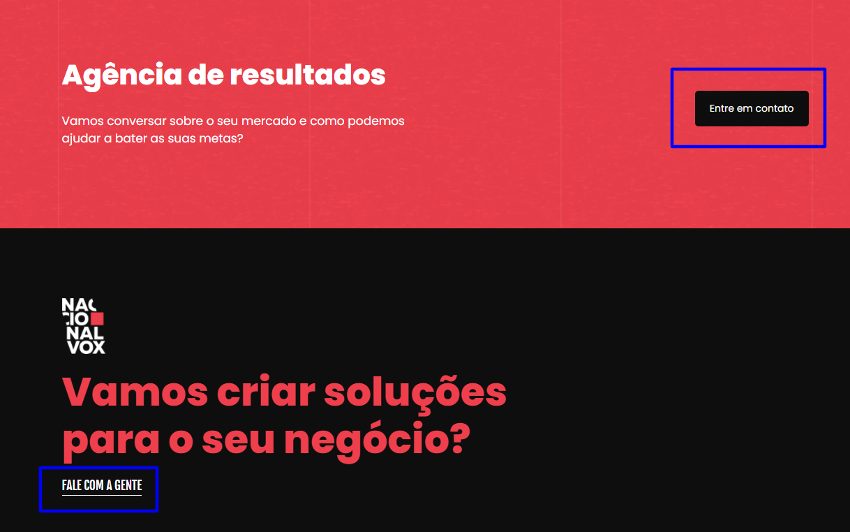
One example is the National Vox website. On the customer page, right after the brand presentation, we inserted two CTAs for interested parties to contact, as highlighted in blue: The “Contact” and “Talk to People”. When clicking, the visitor is directed to a contact form.
- Blog
We've talked enough about content production being essential in marketing, right? Make every article posted on your blog have a different goal, such as attracting the largest number of visitors to other pages or stimulating the sale of a product or service.
Use CTAs, pointing to users what is the next step to be taken. Therefore, it is important to align calls for action with the goal of each blogpost.
Try a text-format call to action, taking the reader to other articles or pages of your website, or insert banners throughout the content for access to complementary materials.
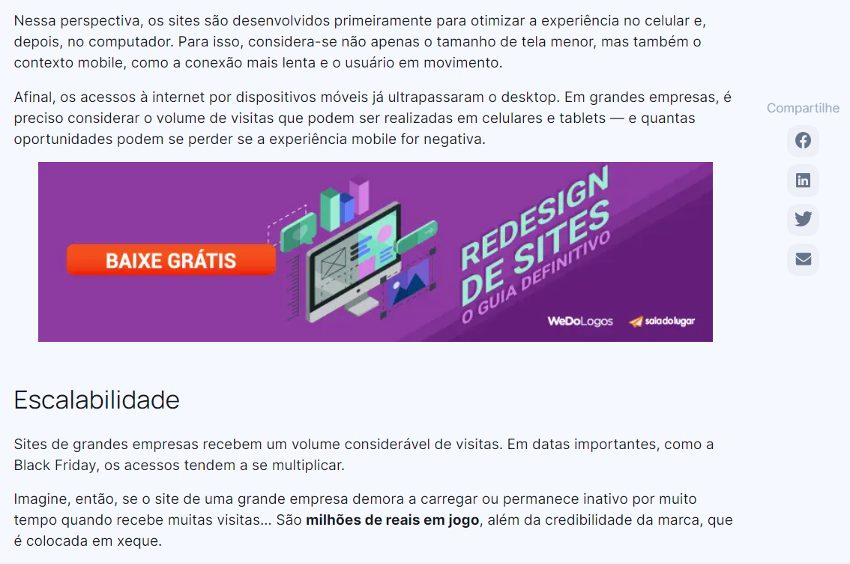
The example below is an article from Rock Content blog, one of the largest inbound content platforms in the market:
In the middle of an article on websites for large companies, the brand has inserted a banner that invites the reader to download a Guide on website design.
- Social networks
Talking about CTA without quoting social media is the same as raining on the wet. To get closer to the consumer, you have to get to it somehow, so companies invest more and more in networks like Instagram, Facebook, LinkedIn, Youtube, Twitter.
As the focus is on these channels, don't forget to include CTAs in posts, making it clear what action you want to be executed when clicking.
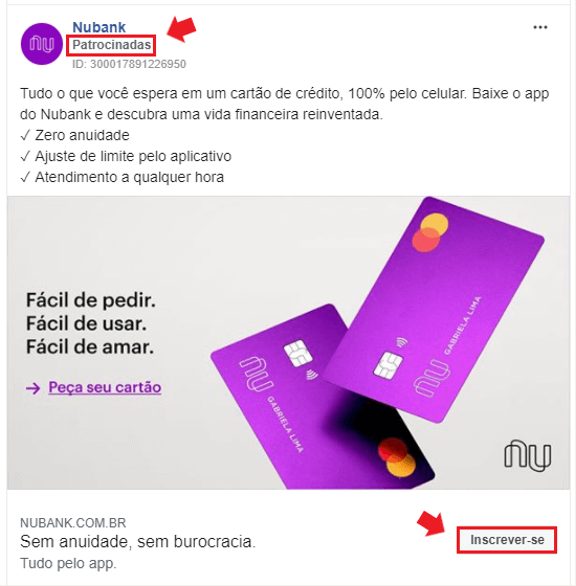
Example of CTA on Instagram used by Nubank to offer credit card, where the goal is to click the button “Subscribe”.
- Email marketing
It's the most traditional way to apply CTAs to marketing. Virtually all email marketing messages are accompanied by calls to action guiding the recipient to the next step of the sales funnel.
Think of a strategy for qualification and nutrition of leads, where call to action can serve to identify the level of interest of prospect and classify it, for example.
In this case, CTAs usually appear as buttons that lead the user to related content or external pages to download rich material.
Example of email sent by Motorola, offering exclusive promotions of products celebrating the company's 93 years, for a list of subscribers to the Newsletter or who are already customers:
The goal, of course, is to take to the sales page, with a simple CTA “Buy”.

- Announcements
If in the email the CTAs are common, as we have just seen, they must be present in any advertising campaign, whether by sponsored links or Ads on social networks. The intention is always to get the user to complete an action, such as signing up for a service or purchasing a product.
In this sense, a well thought-out CTA can make all the difference in the ad conversion rate. Short and flashy texts are indicated to achieve the expected results.
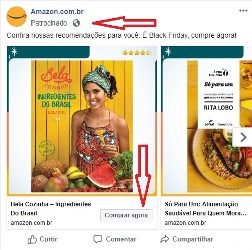
See Amazon ad example on Instagram:
This is a sponsored post with carousel, offering food options with CTA “Buy now”.
- Videos
Yes, your campaigns videos also need to have call to action, as they can and should count on an action call!
Even if it is not always possible to create action buttons on videos ( YouTube even allows the user to enter clickable cards), you can always encourage the visitor to complete an action by means of a spoken or written request in the video description.
Take as an example youtubers who, at the end of the content transmitted, say “if you like the content, click on enjoy and sign up for the channel”.
- Rich materials
Last but not least, think about inserting CTAs into the educational materials you produce, such as ebooks or infographics. In this case, e-mail example the call for action can help in your strategy to get the user to the next stage of the marketing funnel.
Rich materials are part of the inbound-focused strategies, being also used as digital baits on landing pages, as we have written here on the Blog.
Tips for Infallible CTAs
Now that you know how and in which channels to use call to actions, I have gathered some tips that we use in our strategies and that can help in creating, remembering that the more you talk directly to your target audience, the more feedback you will get.
- Mental triggers
If you are using a CTA to sell an infoproduct (online course), try to guide the user with a text that induces the solution of a problem, such as “I want to specialize in such a course”, rather than just “inscribe” or “buy now”.
- Use different texts to test
When it comes to efficient call to actions, the elaboration of numerous texts also suggests tests to make the target audience better understood.
Texts with clear information usually yield good results. Short and direct paragraphs are easy to understand. Changing the order of the elements that constitute the phrase can give greater fluidity in understanding.
- Change colors
It is important that the colors of the button are in contrast to the background of the page, so that the CTA is highlighted more than any other part of the site.
This will cause changes in visitor perception when you are on the site. It is important to bear in mind that the colors chosen for call to action should not change the original design of the site, with the risk of causing damage, such as the disharmony between the action button and the entire structure of the site.
The letters should be bold, because this is another component that draws the attention of those who circulate around the site to perform an action.
- Value Content
Although it is kind of obvious, many people forget: to offer useful and relevant content to the public.
Remember that no one will click on your CTA just because you asked. The user/visitor needs to be sure that he will receive something valuable in return. So make sure the call offer is valuable to your persona.
Conclusion
A tip we always make a point of bringing to conclude topics like this is to measure the results achieved with your CTAs. Always keep an eye on the data and numbers that call to action presents.
The amount of clicks on certain buttons can guide your strategies, understanding what brought conversions and sales or what did not work the way you expected.
Not least, it's the A/B tests that complement this understanding of results, impacting on the best way to be chosen to succeed with CTAs in digital marketing.
Do you like it? Comment down.