
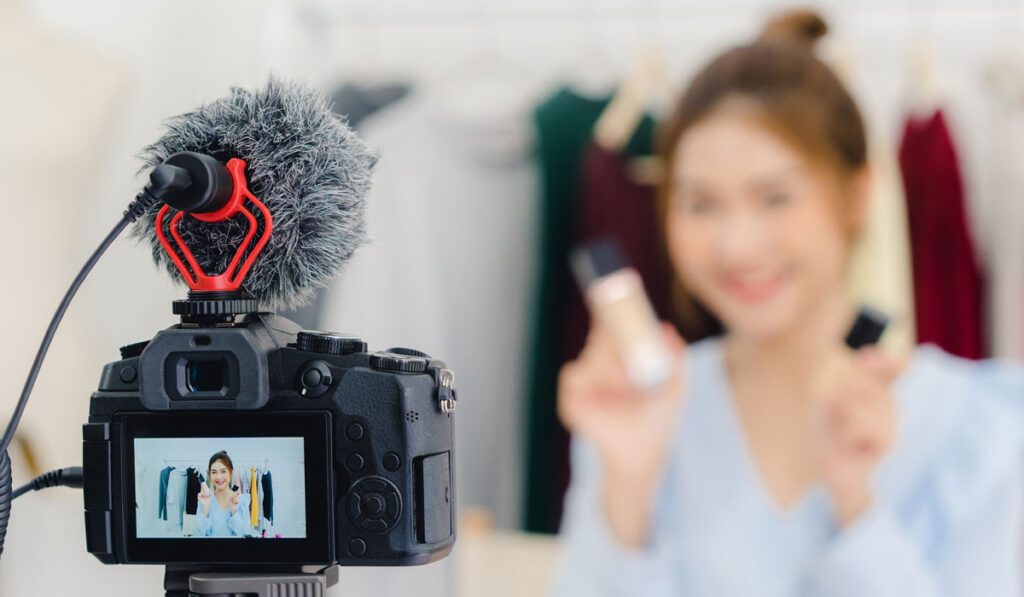
Live Commerce, a term used to describe the combination of video and e-commerce streaming (online sales), promises to revolutionize the retail sector and consumer purchasing habits.
In this article you will have a summary of how live trade is taking shape, trends in retail space and some predictions of what is coming.
Also read:
- Gastronomy and Culture: A Meeting That Transcends Tastes
- Nationalvox is honored by ALESC for its 20 years of innovation in digital marketing
- NVX 20 years: A history of innovation, partnership and success in digital
- Digital Transformation in Cuiabá Companies: Benefits and Challenges
- Social media trends for 2024: platforms that are shaping digital marketing
- The Power of Google Evaluations: How to Improve Your Business’s Reputation
- 7 content to convert to funnel fund with real estate marketing
- Enhance your sales with the power of WhatsApp Marketing
The evolution of retail with the “new normal”
Physical stores have been closing their doors for some time. But with the pandemic of the coronavirus, the end of many businesses has been accelerated. Thousands of companies have broken down or ceased to exist.
Today, chatbots and mobile apps make online customer support almost perfect. Machine learning technologies provide the personalized recommendations we all expect.
E-commerce has already transformed everyone's lives, even in social distancing. And even if things get back to normal, the physical stores will still lose space. But some aspects of the shop experience disappear when shopping in the digital world.
Buying was always a sensory experience. Vision, touch, sound, smell and taste are useful when evaluating an item for purchase.
Now that online has become the predominant place for consumers to search for goods and services, sellers are struggling to reproduce these material aspects of purchases.
It is no secret that buying online provides convenience. But what about engagement? A visit to Amazon. How will it be as fun as a walk through the city shopping centers?
Perhaps the answers are understood through Live Commerce. By merging online retail with live streaming, companies are trying to bring consumers a step closer to personal experience.
Live Commerce can be defined as a type of sales strategy and dissemination of products and services performed in the online environment.
This format integrates Live broadcasts (Lives)) linked to the objectives of a traditional e-commerce, in order to clarify the audience's doubts regarding a given product and service, increase the confidence and credibility of the brand and significantly increase the possibilities of sale.
Where did Live Commerce come from?
Social platforms, such as Snapchat and TikTok, have already experienced sales possibilities through videos and content that can be purchased. Although Snapchat has decreased in popularity in recent years, TikTok is a promising option that is on the rise.
To understand Live Commerce, the first place to look is China – where it is projected that will soon become a trillion-dollar market for yuan ($157,5 billion). The sales-focused video was alive and well in China before the pandemic and quickly expanded after COVID-19.
According to the Chinese government, more than 10 million Live Commerce flows were hosted in the first six months of 2020.
The impact of video on online sales
It is common to emphasize the importance of product photos for e-commerce. And of course, photos are a key factor for selling online; however, videos allow the user to see the product more closely – especially when it is complex or very small.
The video also helps the buyer connect with the product and see it in action or how it is used. Because things cannot be touched – the main disadvantage of online shopping – to be able to see someone holding and explaining the product allows all questions to be clarified.
Photos with zoom and 360o turn option are also a valuable tool for the consumer to “play” with the product as if it were in his hands; however, the video provides more information on how the product moves and works in action.
A survey with online US buyers recorded that most expect to see an average of 6 photos and 3 videos per product before deciding to purchase. Furthermore, 66% of users who wish to find information about the products prefer to watch a small video.
Types of Live Commerce
Just as online shopping transformed retail twenty years ago, live broadcasting promises to transform e-commerce today. Live Commerce call, this video and shopping convergence helps improve engagement, reduce the gap between customer and product, boost sales and – where there are bids – increase the average selling price.
Let's take a look at some of the most common formats for practical application:
Marketplaces Online
Two authentic representatives of this category are the Free Market and eBay, more recently the Amazon, allow users to buy and sell products without ever leaving home.
But the addition of live video streaming is vital to maintain the interest of buyers. Why? The possibility of buying online is no longer a novelty. Without new layers of involvement, online markets will become a thing of the past.
By integrating live transmission into the platform, these markets can offer the closest possible experience of “being there” for those who tune in from the sofa at home. Real-time interactivity replicates the urgency of a real market, requesting immediate action and greater community participation.
Live Auctions
The live video broadcast is bringing auction houses of the 18th century, such as Sotheby’s and Christie’s, to the 2020s. By enriching their digital presence, these organizations are connecting interested worldwide with the excitement of the sales room.
Live broadcast opens the bidding pool for those who cannot physically attend, reaching participants with varied interests and ensuring that each item is sold with its proper evaluation.
Online auctions are a big deal and real-time video delivery is critical. Whether it's auctioning cattle or artwork, any delay in a live broadcast can prevent the bids from being recorded correctly. Second fractions can translate into billions of dollars of lost revenue by deploying these formats online.
Influencer Streaming
Today's celebrities aren't necessarily on the big screen. Reality TV has put media personalities on the digital map, and an increasing number of stars are gaining fame on social media every day. This, in turn, opened up new revenue opportunities.
With an already captive audience, influencers can use their personal brand and the power of live streaming to promote their favorite products in an interactive format.
The influencer streaming originated on social media, but now it has also become common in e-commerce sites. The format converts younger demographic data with the highest rate. While only 26% of the general population purchase decisions are based on social influencers recommendations, the same is true for 44% of the Z generation.
Live Events
There is much overlap between live events and the categories described above. Still, events worthy of note, such as product releases, limited edition releases and retail holidays such as Valentine's Day or Black Friday are incredibly good for buyable live broadcasts.
Without the possibility of face-to-face due to sanitary restrictions, large brands use technology to hold amazing online events with fantastic and interactive scenarios, where CEOs and influencers help in selling and disseminating.
Today, streaming mobile allows fans to buy real-time items on the runways of Louis Vuitton and Victoria’s Secret.
Live Commerce Professional Level
Performing successful Lives with quality and security is not an easy task. Facilitating tools are required, such as:
- Have a good script with assertive content;
- Strategic marketing and sales planning;
- Good digital host or influencer of your niche;
- Personalised dedicated scenario with sound insulation and professional tools (a studio for example);
- Professional lighting equipment;
- Professional sound equipment;
- Professional cameras for capturing high-resolution high-quality images;
- If possible, a professional team of Streaming for scene management;
- IT team for the security of the information transmitted;
It is recommended to plan the scenes of displaying your products, the best angles and how to make it possible in the best way for the audience. If you have a broad knowledge of audiovisual resources such as professional cameras, sounding, editing, Streaming tracking, start planning your Live Commerce project right now.
If you are not a part of the subject, the ideal is to look for a company that does the planning and management of Lives to create a professional Live Commerce project, reducing or even exempting the error possibilities that can directly affect the credibility of your brand or business.
Conclusion
With or without pandemic, traditional retail was clinging to an outdated model. But that does not mean that businessmen should abandon all aspects of personal experience.
When Live Commerce is done correctly, real-time gamification and interactivity help to arouse consumer interest. 3D immersive experiences using virtual reality (VR)) can also help involve remote users – allowing buyers to study clothes from every angle and experience the thrill of being in the middle of a parade, for example.
No, Live Commerce is not an exact replica of the shop experience. But in an economy where customer experience tells you which brands live and which ones die, why not reach customers on their own terms with online and live engagement?
Did you like this article? Comment down.