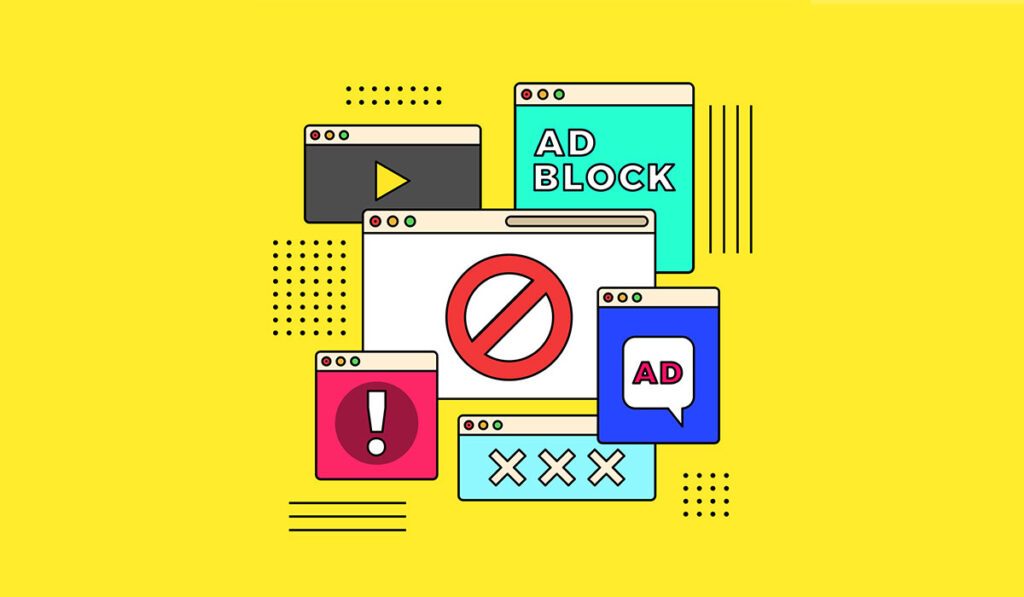
For those who work with marketing, pop-up ads are still an effective way to attract visitor attention and encourage you to convert in some way. Although these intrusions that open up on the screen are universally hated by Internet users, when people say they don't like pop-ups, what they really mean is they don't want to see bad pop-ups being used.
Companies and businesses can now use all kinds of pop-ups and pop-up contact forms to increase the probability of the desired action being completed on a destination or action page, maintaining consistency with the desired message and a good aesthetic appearance.
See also:
- WaveMaster AI closes 192 spots in Brazil by integrating 20 monitored beaches and over 800 beaches on 6 continents
- Forget the “123456”: How a Password Manager Can Simplify Your Digital Life (and Avoid Head Pain)
- Password Manager: The Unnegotiable Pillar of Your Digital Security in the Connected Age
- The Power of Google Evaluations: How to Improve Your Business’s Reputation
- How to make a diagnosis of your website performance
- CRM for real estate and construction companies: boosting sales and loyalty to customers
- Best practices for digital security on websites
- Does organic reach still make sense in digital marketing?
- Optimizing AI Ads for Digital Performance
- What territorial marketing is and how to do
Contents
Toggle- Use pop-ups in moderation
- Pop-up strategic marketing
- Pop-ups reengage with the pattern interruption technique
- 4 tips to hit the use of pop-ups
- The most common types of pop-ups
- Conclusion
Despite their popularity among marketing professionals, end users don't like pop-ups very much. In fact, Nielsen Norman Group described pop-ups as the “ more hated advertising technique“ ”
It's easy to understand why so many people hate pop-up ads. They literally appear on the screen, interrupting what you're doing. To make matters worse, they usually appear without the explicit permission of the visitor, which means that they are usually an unwanted interruption.
Poorly implemented pop-ups can obstruct content or important features, and some may be difficult to close. Important to warn you that Google penalizes sites that use intrusive pop-ups. This could be disastrous for your strategies of SEO (Search Engine Optimization).
But if used correctly, pop-ups can help you create a more engaging and interactive site. According to the survey, the 10% of pop-ups with better performance have an average conversion rate of 9.28%. Some pop-ups still have an impressive 11% conversion rate.
This suggests that these small windows can still have a positive impact and you just need to use them carefully!
Pop-up strategic marketingThere is a process by which the user who accesses the content decides whether or not to act, as happens with most marketing techniques focusing on conversion. Essentially, there will always be individuals who do not complete their desired activity, no matter how good their offer or how successful it brings visitors to the page.
As a result, pop-up can be used strategically to increase the probability of someone completing an activity, either the one that was initially sought or the one that has the least friction.
And strategically thinking pop-ups on a site are used to optimize your overall conversion rate, whether to increase your sales, generate more leads, email registrations (newsletter), increase engagement and reduce dropout of cart (e-commerce).
Pop-ups have become an efficient solution for marketers, as they are easy to create. There are also free and easily integrated pop-up tools on your site platform.
There are also free and paid pop-up tools, which easily integrate into your website platform, such as Poptin or SendPulse. On the second platform you can start the use pop-ups and set them up free for up to 3 projects, with more than 30 launch scenarios, ready models and A/B test.
Depending on your marketing campaign, you can choose from different types of pop-ups, such as lightboxes, full screen overlaps, top and bottom bars, slide-ins, gamified pop-ups types, countdown pop-ups, video pop-ups and more.
Pop-ups reengage with the pattern interruption techniquePattern interruption is used efficiently in neurolinguistic programming (NLP) adopted by sellers and marketers. The premise is relatively direct: do or say something unexpected to interrupt a person's behavior patterns.
We create moments of change interrupting routines, so some people use the approach to break undesirable habits. Interrupting a routine with something as fundamental as putting a rubber band on your wrist might help.
A similar idea drives most types of pop-ups. Unexpectedly, they present the visitor with a tempting offer, persuading him to reconsider his typical path to the “turn” button or even to abandon the site.
You can use the design and content of pop-up as an elastic to draw the visitor's attention and redirect it to something else, such as an unexpected sale linked to what they were seeing before.
However, avoid relying only on creative pop-up promotions and designs. You should be very careful when choosing how and when you want to display your pop-ups to avoid interrupting the visitor's browsing experience.
Targeting rules, smart triggers and other features, such as output intent technology, can help you engage with the most qualified leads at the right time.
4 tips to hit the use of pop-upsIf you use pop-ups incorrectly, you may end up scaring potential customers instead of convincing them to convert. With that in mind, I separated 4 tips for a results pop-up marketing strategy:
1. Use only one pop-up per page
Creating careful planning, you can create pop-ups that don't irritate your visitors. However, even if you create a call-to-action (CTA)) Killer and include your message at exactly the right time, it's important not to get carried away. This means you should avoid displaying multiple pop-ups on the same page.
Visitors may be willing to forgive the occasional unwanted marketing message. However, if you bomb them with insistent pop-ups one after another, they may quickly lose patience with your site.
Keep in mind that many people also associate persistent ads with con artists. Malicious sites usually attack visitors with pop-ups in an attempt to induce them to download viruses. If you display multiple pop-up ads per page, your prospects or potential customers may start questioning the reliability of your site and this is bad for your reputation on the internet.
2. Content needs to be attractive
To generate conversions with pop-ups, you will need to offer visitors something they want or are looking for on the internet. Although it is impossible to guess the user's behavior, you can often identify the content that he is interested in, based on the actions he performs on your site.
Here's an example: If anyone visits your store's pre-order page, they may be interested in participating in your email list. In this scenario, you can display a pop-up of entries “Don’t miss any news or offer” that promises to keep the visitor informed about the next releases.
Linking your pop-up to page content can also be a powerful way to encourage conversions. For example, the page can push the visitor for a specific action (CTA). You can then deploy a pop-up that facilitates the execution of this task.
3. Leave the “Exit” button visible and within reach
Many visitors will want to leave your pop-up without doing anything. People usually close a pop-up by clicking on the little X in the upper right corner. However, some sites intentionally make this button difficult to find. This may include putting the output icon in an unexpected location, using a color that blends into the background of the pop-up, or even resize the window so that X appears outside the screen.
This is an infallible way to make visitors suspect your website. If it's almost impossible to close your pop-up, most people will probably leave your site and go to their competitors.
To avoid losing visitors and potential customers, it is advisable to put the X button in the upper right corner, where people usually expect to find it. You can also consider the use of contrasting colors to ensure that the output icon is highlighted from the rest of the content.
If pop-ups are still considered invasive or annoying, imagine if you still can't close them!
4. Test your pop-ups on mobile devices
And here's a tip of the most important: poorly designed pop-ups can be frustrating on desktops. However, for users of smartphones and tablets, they can easily occupy the entire screen.
Over 90% of the global Internet population uses a mobile device to stay online. With that in mind, you cannot afford to leave aside your mobile audience.
It is vital that you test all your pop-ups on mobile devices. In particular, ensure that the output icon (x) is visible on these smaller screens and that it is easy to interact with. It may be necessary to change your position or increase your size so that you access it by mobile phone.
Pop-ups can even affect your site's performance. And this is particularly true on mobile devices, which usually have less power compared to desktop computers. If a pop-up makes your site slow or does not respond, you should redesign this pop-up to use less resources.
The most common types of pop-ups- Scroll: are the CTA (Call to Action) models, displayed when the visitor is browsing on your page and reaches up to 50% of the page height.
- Output: as the name itself already says, they are displayed when the visitor tries to leave his page;
- Furniture: are responsive pop-ups, adapted to run on smartphones and tablets. Some tools do not offer this option, limited to the desktop. So choose the platform carefully before using it.
- WhatsApp button: is a floating button of the message application that appears on the screen at the time the visitor enters your site.
As we have seen so far, using pop-ups on websites is still quite relevant in terms of digital marketing or inbound marketing. With proper planning and management you can create pop-ups that can really add value to the visitor who knows how to attract the customers you are looking for.
And to close, remember that you should always consider the user experience and use A/B test approaches to make the most of these pop-ups strategies. Also, make sure to search for a powerful codeless pop-ups builder that offers multiple customization options or ready-to-use templates so you don't create everything from scratch.